
35+ Years of Experience

3k+ Real Patient Reviews
10,000+ Breast Surgeries Performed
Texas Super Doctor
Breast Implant Exchange in Houston
Your breast augmentation was supposed to be the end of the process, not the beginning of a new concern. If your implants have shifted, hardened, rippled or simply don’t look the way you’d hoped, you’re not stuck with a result that doesn’t feel like you. Board-certified plastic surgeon Dr. Paul Vitenas has performed more than 10,000 breast procedures throughout a career spanning over three decades, and a growing number of those cases involve women who need corrections after a previous augmentation.








Breast Implant Exchange Before & After Photos
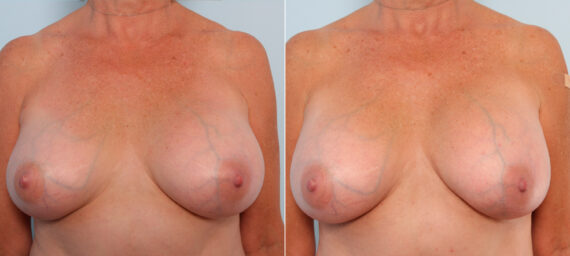
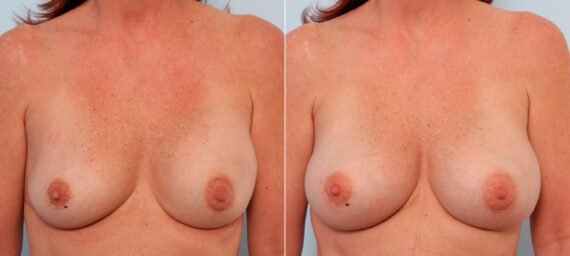
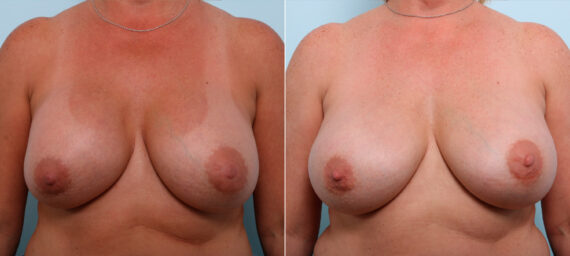

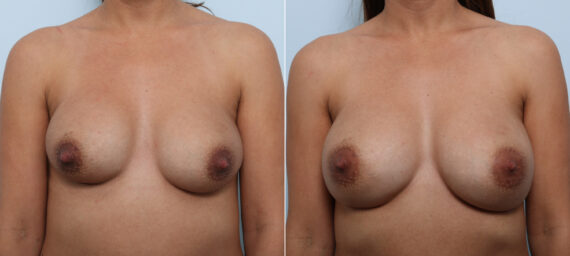
Each Patient is Unique and Individual Results May Vary
Discover Why Patients Across Texas Choose Dr. Vitenas for Breast Implant Exchange & Revision
“This is my second revision because of capsular contracture. Other doctors have told me there was nothing that could be done about it. Dr. Vitenas has a procedure that prevents it from happening again. I’m so pleased with the results. I only regret I didn’t go to him first. In addition, this was the easiest and least painful recovery I’ve had. I would recommend Dr. Vitenas to anyone. If you’re going to have surgery, why not go to the best?”
— Brandy Garney
Breast Implant Exchange & Revision: What You Need to Know
Breast implant revision and breast implant exchange are terms that often get used interchangeably, and the procedures do overlap quite a bit. In general, a breast implant exchange refers to replacing your current implants with new ones, often because you want a different size, type or feel. A breast implant revision is a broader procedure that may involve correcting a complication like capsular contracture, repositioning implants that have shifted, repairing the breast pocket or addressing asymmetry. In many cases, revision and exchange happen at the same time.
According to the American Society of Plastic Surgeons, breast implant removal procedures increased steadily through 2024, reflecting a growing number of women seeking to update, correct or replace aging implants. Dr. Vitenas sees patients from across the country who come to him after a previous augmentation performed elsewhere didn’t turn out the way they hoped, and revision cases make up a meaningful part of his practice.
Common Reasons for Breast Implant Exchange & Revision
Women pursue breast revision for a wide range of reasons. Some are medical, some are cosmetic, and many are a combination of the two. Here are the most common scenarios Dr. Vitenas sees:
- Size or shape dissatisfaction. After living with your implants for months or years, your preferences can change. Some women want to go larger, some want to go smaller, and others want a different profile or projection. Weight fluctuations, pregnancy and aging can all shift how your implants look on your frame.
- Capsular contracture. Your body naturally forms a thin layer of scar tissue around any implant. In some cases, that tissue tightens and squeezes the implant, causing the breast to feel firm, look distorted or become painful. Capsular contracture is graded on a scale of one to four, with grades three and four typically requiring surgical correction.
- Implant malposition. Implants can shift over time. Bottoming out occurs when the implant drops below the natural breast crease, making the nipple appear too high. Lateral displacement pushes the implants too far apart, while symmastia (sometimes called “uniboob”) happens when implants move too close together in the center of the chest.
- Rippling or wrinkling. In patients with thin overlying tissue, the edges of an implant can become visible through the skin. This is more common with saline implants and can often be improved by switching to silicone or adjusting the placement.
- Implant rupture or deflation. Saline implants deflate noticeably when they rupture, since the body simply absorbs the saltwater. Silicone ruptures are harder to detect because the gel tends to stay contained within the scar tissue capsule, which is why routine implant monitoring matters.
- Switching implant types. Many women who received saline implants years ago want to upgrade to today’s silicone gel implants, which have a softer, more natural feel. Others may want to switch from textured to smooth implants based on current recommendations.
Am I a Candidate for Breast Revision Surgery?
If you’ve had a previous breast augmentation and something about your results isn’t right, you’re likely a candidate for revision. Good candidates are generally in good health, nonsmokers (or willing to quit before and after surgery) and have realistic expectations about what revision can accomplish.
It’s worth noting that revision surgery is more complex than a first-time augmentation. The surgeon needs to work within existing scar tissue, evaluate the condition of the breast pocket and potentially correct structural issues left over from the original procedure. This is exactly why choosing a highly experienced surgeon matters so much for revision cases. Dr. Vitenas has spent decades performing breast surgery and regularly operates on patients who come to him after unsatisfactory results with other surgeons.
If you’re not sure whether you need revision, the best thing you can do is schedule a consultation. Dr. Vitenas can examine your implants, assess the issue and let you know what’s realistic.

Do Breast Implants Need to Be Replaced Every 10 Years?
This is one of the most common questions Dr. Vitenas hears, and the short answer is no. When breast implants first came on the market, a 10-year replacement guideline was standard. But modern implants are manufactured with significantly improved materials and durability. Today’s silicone gel implants can last 15 to 20 years or longer, and many women go well beyond the decade mark without any issues.
The real answer is that implants should be replaced when there’s a reason to replace them, whether that’s a complication, a change in how they look or feel, or simply a desire to update. Routine check-ups with a board-certified plastic surgeon help you stay ahead of any problems and make an informed decision about if and when a revision makes sense for you.
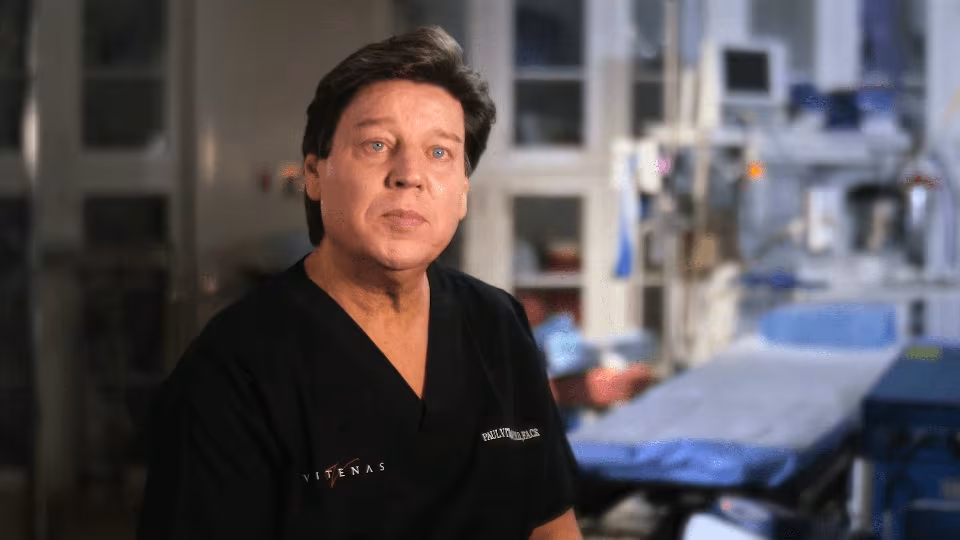

The Dr. Vitenas Experience: What to Expect From Start to Finish
Your Consultation: Every Breast Revision Journey Begins Here
During your consultation, Dr. Vitenas will examine your breasts, review your surgical history and discuss what’s bothering you about your current implants. He’ll take measurements, evaluate your tissue quality and recommend a plan that addresses your concerns. You’ll also review before-and-after photos of revision patients with similar issues, so you can see the kind of improvement that’s possible.
If you’re considering a change in implant size or type, Dr. Vitenas will walk you through the options available. He may also recommend additional procedures like a breast lift if your breasts have developed ptosis (drooping) since your original augmentation.
Pre-Op: How Should I Prepare for Breast Revision?
Preparation mirrors what you’d expect for any breast surgery: stop smoking, discontinue certain medications and supplements that increase bleeding risk, and complete any lab work needed for medical clearance. Dr. Vitenas may also order imaging (such as an MRI or ultrasound) to evaluate the current condition of your implants before surgery. You’ll want to arrange for a ride home and some help around the house for the first few days of recovery.
Surgery Day: What Happens During the Breast Implant Exchange Procedure?
Breast revision surgery is performed under general anesthesia in Dr. Vitenas’ AAAASF-accredited surgical center. The procedure typically takes one to three hours, depending on the complexity of the correction.
Incisions are placed in the breast crease whenever possible to keep scarring discreet. Dr. Vitenas removes the old implants along with any problematic scar tissue, makes any necessary adjustments to the breast pocket, and positions the new implants. In cases involving capsular contracture or implant malposition, he may use an acellular dermal matrix product like Strattice to reinforce the pocket and reduce the risk of recurrence.
Breast Implant Revision Recovery Timeline
Recovery from breast revision is often easier than recovery from your original augmentation, since the breast pocket already exists. Here’s a general timeline:
- Week 1: Expect swelling, tightness and mild discomfort. Prescription medication will help manage any pain. You’ll wear a supportive garment as directed by Dr. Vitenas.
- Weeks 2-3: Bruising fades, and most patients feel comfortable returning to desk work. Your breasts may still look slightly swollen or sit higher than their final position.
- Weeks 4-6: Strenuous exercise and heavy lifting can typically be resumed toward the end of this period, once Dr. Vitenas clears you. Swelling continues to resolve.
- Months 3-6: Your final results take shape as the implants settle and any residual swelling fully subsides. Incision lines continue to mature and fade.
You’ll have regular follow-up appointments with Dr. Vitenas throughout your recovery, and our team is available if questions or concerns come up between visits.
“No two revision cases are the same. What I see when I open things up often tells me more than any imaging did beforehand, and that’s where experience makes the difference.”
— Dr. Vitenas

Why Dr. Vitenas Is Houston's Go-to Breast Revision Surgeon
Revision surgery requires a surgeon who can problem-solve in real time. Scar tissue from a previous procedure, damaged breast pockets and complications like capsular contracture all demand a level of judgment that only comes with experience. Dr. Vitenas has spent the majority of his career focused on breast and body surgery, and his practice regularly receives patients from across the country who need corrections after surgery performed elsewhere.
He is a board-certified plastic surgeon with fellowship training in craniofacial surgery, oral and maxillofacial surgery and cosmetic surgery. His accredited surgical center at 4208 Richmond Ave in Houston houses everything from consultation rooms to operating suites, so your entire experience happens in one location with the same team.

"I've always had this outlook throughout my entire practice. I never want to make people look like they have had work done. I always want them to look better, but not done."
- Dr. Vitenas
Planning to Visit Houston for Breast Implant Exchange?
Our dedicated patient liaisons provide high-touch coordination for every step of your breast implant exchange and revision journey. From securing private local accommodations to arranging post-operative nursing care, we handle the logistics so you can focus entirely on your results. Experience a seamless, stress-free breast revision tailored to your schedule.
Ready to Take the Next StepWith Implant Replacement?
If your breast implants aren’t giving you the look or comfort you expected, a consultation with Dr. Vitenas is the place to start. He’ll evaluate your situation, explain your options and help you decide on the right path forward. Contact us today to book your appointment.
Breast Implant Exchange FAQ
How much does breast implant revision cost in Houston?
The starting cost of a breast implant exchange with Dr. Vitenas is $9,000. Revision cases that involve more complex corrections (such as capsular contracture repair or pocket reconstruction) will be priced based on the specifics of your surgical plan.
All pricing at Vitenas Cosmetic Surgery is all-inclusive, covering surgeon fees, anesthesia, the surgical facility and follow-up care. Financing options through CareCredit, Cherry and Alphaeon Credit are available.
What is the difference between breast implant removal and breast implant revision?
Breast implant removal (explant surgery) takes your implants out without replacing them. Some women pair removal with a breast lift or fat transfer to reshape the breasts after the implants are gone. Breast implant revision, on the other hand, removes your current implants and replaces them with new ones while also correcting any issues with the breast pocket, scar tissue or implant position. If you're unsure which direction is right for you, Dr. Vitenas can walk you through the pros and cons of each during your consultation.
Can a breast lift be performed with implant revision?
Yes, and breast revision with a breast lift is a common combination. Many women who seek revision have also developed some degree of breast drooping since their original augmentation. Combining a lift with revision allows Dr. Vitenas to address the position, shape and volume of the breasts all at once.
How long is the recovery from breast implant revision?
Most patients return to desk work within a few days to one week. Exercise and strenuous activity should be avoided for four to six weeks. Full results are visible within three to six months as swelling resolves and the implants settle.
What are the risks of breast revision surgery?
As with any surgical procedure, there are risks involved, including infection, bleeding, changes in nipple sensation, capsular contracture recurrence, implant malposition and unfavorable scarring. Dr. Vitenas takes careful precautions to minimize these risks, and his experience with complex revision cases is one of the reasons patients seek him out.